What does Tier 1 mean for a specialist setting? What does this look like when a lot of the MTSS resources and examples are tailored for mainstream schools? Join Charlotte to learn about implementing MTSS with fidelity at Tier 1, Tier 2 and Tier 3 in specialist settings. With a wealth of knowledge and practical experience.
Charlotte aimed to break down the barriers, simplify the research into "the best bang for your buck" and discover what works best for all students in schools.
As students move from the early years into middle and upper primary, there is a sharp increase in the number of complex (abstract) words they are likely to encounter in text - and that they will be expected to use in their writing. Most of these words are either Latin or Greek in origin, include orthographic patterns that differ from those found in everyday Anglo-Saxon words and rely heavily on morphemes.
Students who are aware of these structural changes (and the history behind them) are consistently more accurate readers and spellers - and are more likely to develop a larger and more connected vocabulary. This in turn contributes to stronger reading comprehension and elevated written expression skills.
In these sessions, participants will take a crash course in the history of English and will explore the question ‘What is lexical quality?’ In addition, an overview of instructional practices designed to improve both spelling and vocabulary development in the mid/upper primary years will be provided.
As explicit instruction gains momentum across Australia, it has been accompanied by some vocal cries against differentiation. Yet research indicates that gifted and high potential students benefit from grouping with peers and experience negative academic and socio-emotional outcomes when instruction is not differentiated.
This session first examines this conundrum through the evidence around differentiation and ability grouping, before exploring strategies that transform theoretical best practice into immediate classroom application. We’ll delve into methods to add depth and abstraction, encourage higher-order thinking and generate low entry-high ceiling tasks that provide stretch for gifted students. K-12 illustrations make this relevant and practical for all teachers.
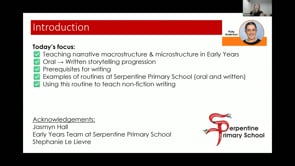
This session showcased Serpentine Primary School’s structured approach to developing emergent writers in the early years. Polly Anderson shared practical routines that use oral language, syntax, picture sequences, and macrostructure icons to support writing development. Participants explored differentiation strategies and scaffolded instruction that gradually builds student independence in narrative and information writing.

This session will examine how teachers can use real-time feedback to guide their teaching, making learning more effective and targeted. Using insights from cognitive load theory, spaced learning, and scaffolding, we’ll discuss how to respond to student needs, address misconceptions, and adjust instructional strategies on the spot.

Checking for Understanding
This session tackles one of education's most crucial challenges: accurately assessing student comprehension in real-time. Drawing on research from cognitive science, this session will explore effective strategies for formative assessment, including retrieval practice, diagnostic questioning, and the use of misconceptions as learning opportunities. Participants will leave with practical techniques to make student thinking visible and adjust instruction accordingly.
Learn about the techniques that enable learners to engage in efficient Discussions, respond to rigorous Questioning, and thrive in a culture of continual learning through effective Check for Understanding (CFU).
Sacha & Reid unpack whole-school assessment systems and provide practical strategies for leading meetings that change teaching practice using data and feedback for students.

Expertise in teaching, like in sport or music, relies on strong knowledge, adaptable skills, and effective habits. In this webinar, Stuart Kime explores what the Science of Learning reveals about developing teaching expertise and helping every teacher become more impactful. Drawing on the latest research, he shares practical, evidence-informed strategies that educators can apply immediately in their own classrooms.
