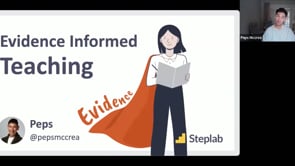
What does research tell us about effective teaching? Which strategies are more powerful than we tend to think? This session will offer a framework of 5 evidence informed strategies which teachers can use to boost learning, motivation, and equity in school.

Everyone who implements MTSS for reading improvement understands that Tier 1 is the foundation of success. But what does this really mean in practice in primary schools?
This webinar will expose 3 common misunderstandings about the Tier 1 system of reading support including mandates to implement Tier 1 with fidelity, expose students to grade-level standards, and provide only whole group phonics instruction.
Participants will explore how to use screening, diagnostic, and progress monitoring data to build a Tier 1 system that reduces risk, minimizes the need for intervention, closes gaps, and meets the needs of all students.
As explicit instruction gains momentum across Australia, it has been accompanied by some vocal cries against differentiation. Yet research indicates that gifted and high potential students benefit from grouping with peers and experience negative academic and socio-emotional outcomes when instruction is not differentiated.
This session first examines this conundrum through the evidence around differentiation and ability grouping, before exploring strategies that transform theoretical best practice into immediate classroom application. We’ll delve into methods to add depth and abstraction, encourage higher-order thinking and generate low entry-high ceiling tasks that provide stretch for gifted students. K-12 illustrations make this relevant and practical for all teachers.
In this session Heather goes back to first principles and explore why knowledge matters and what is meant by a knowledge-rich curriculum. She discussed what this means for teachers and especially the implications of adopting a knowledge-rich curriculum for lesson design. She considered some of the most common pitfalls when trying to adopt a knowledge-rich approach, for example, moving onto task design without clarity about content choices at different levels of granularity.
This session explored how subject specialists and non-specialists can contribute to knowledge-rich curriculum design. Heather examined curriculum progression, the differences between hierarchical and cumulative subjects, and key principles such as coherence, disciplinary rigour, and memory. Participants gained practical insights into designing curricula that build deep understanding and support long-term retention.
