
Adopting MTSS Webinar by Karina Stocker
By Martin Ravindran

Drawing from her broad range of experience in various school settings and her PhD research, Karina presents us with practical ideas and provocations for how multi-tiered systems of support (MTSS) are implemented within school. As Karina says, MTSS is more than “a triangle of tiered supports”, and instead guides us to use implementation science to investigate the state of MTSS in our own school contexts, and plot a way towards sustainable roll-out.
MTSS needs to be a system of systems that inform one another.
An implementation science lens
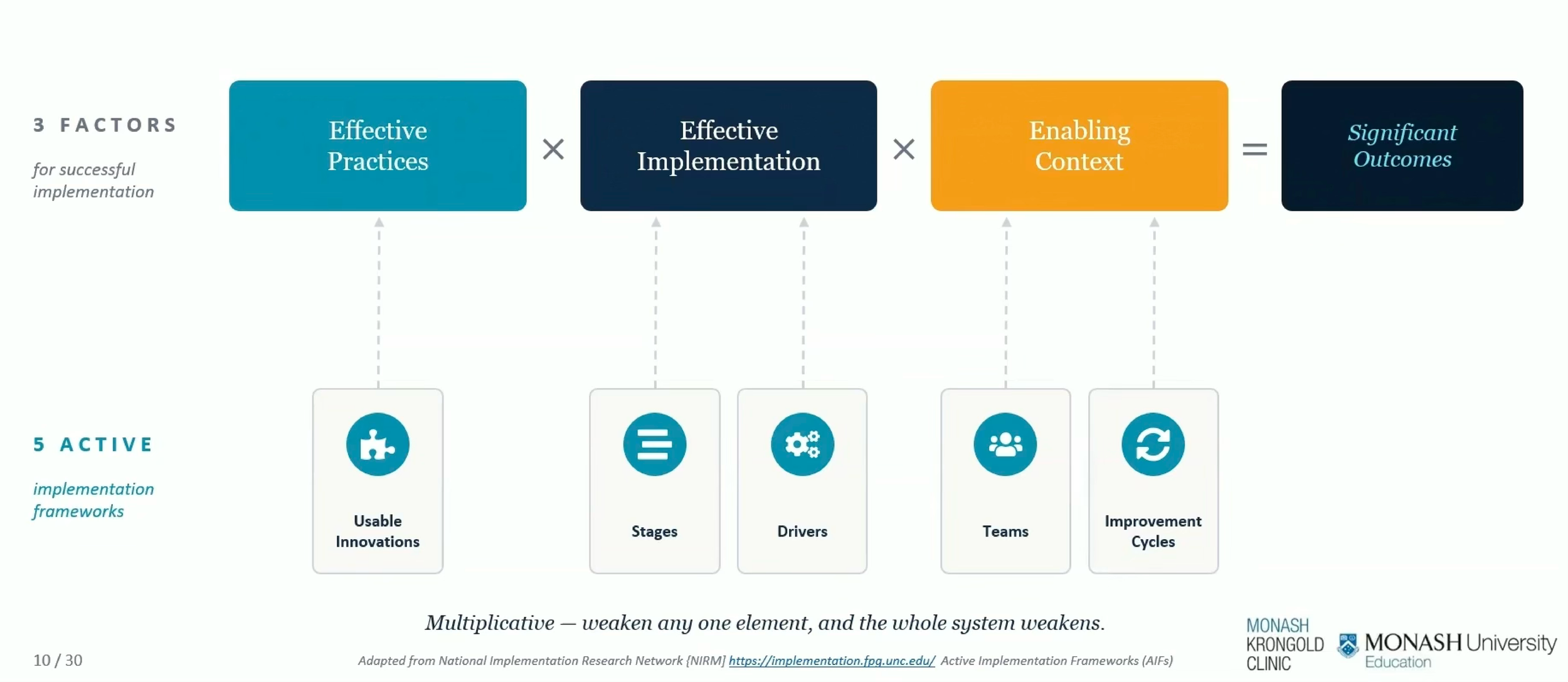
With the increased expectation for schools to deliver effective support through MTSS, Karina suggests that an implementation science lens can help us understand the challenges faced by schools attempting to set up MTSS frameworks, and help a context better forge the way forward. Implementation science concerns itself with what the necessary conditions are for something to work in a setting, and helps shift the conversation from the “what” to the “how”.
Understanding MTSS
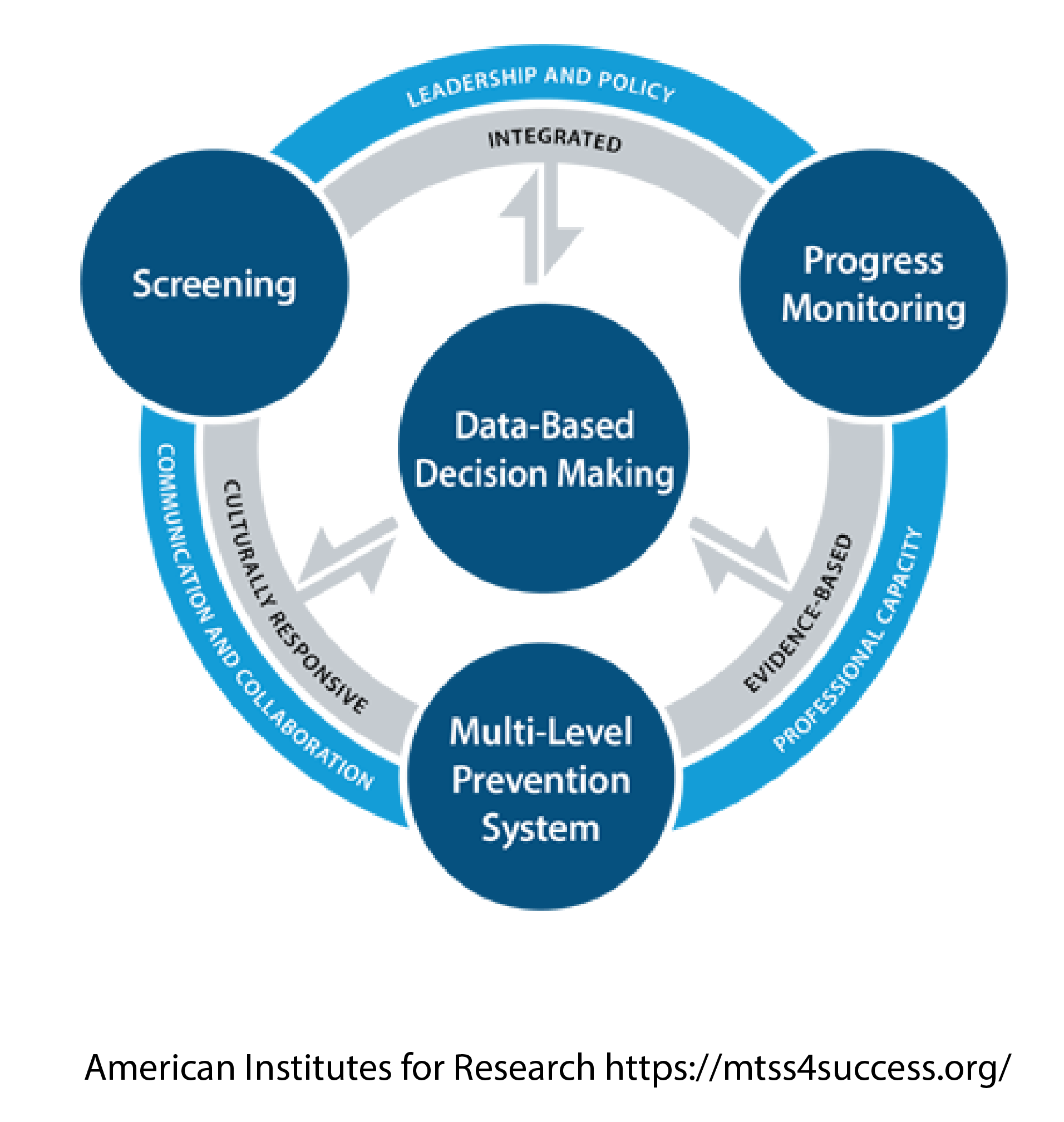
How we define something shapes how we approach it. Currently, MTSS is plagued by the curse of ambiguity that “explicit teaching” faced not so long ago, which has unfortunately caused it to be reduced to simply “intervention” in many school contexts. Karina reminds us that MTSS is not a programme to adopt, nor is it a thing you do. Rather, MTSS is a whole-school framework that should guide organisational decisions within a school context. This should be a data-driven systems framework that coordinates practice, professional learning, and priorities to help bolster student outcomes.
The model put forward by the American Institute of Research, the central tenet of the MTSS framework is the data-driven decision making from which we decide where to begin, and where to next. Without a coherent framework that pulls components together, MTSS runs the risk of becoming fragmented practices with short term buy-in, when the goal should be sustained practice and improvement.
In other words, MTSS needs to be a system of systems that inform one another. For instance, criteria for entry and exit into intervention need to communicate with timetabling constraints and priorities, while the tier 1 curriculum and documentation should be supported by the interventions delivered through MTSS. All throughout, data should be collected and shared between stakeholders such as teachers, parents, and other individuals involved in providing support to students.
The Active Implementation Framework put forward by National Implementation Research Framework provides a model by which to evaluate the robustness of MTSS within contexts. The multiplicative nature of the factors suggests that weakness in any one of these areas would result in a significant drop in outcomes. These factors are made possible by the active components, namely;
Usable innovations - Clearly described, replicable and actionable evidence-based practices that include routines and documentation.
Stages - When implementation should happen.
Drivers - Deciding what drives effective implementation. Are the optimal drivers organisational (timetables), or is it leadership (buy-in), or staff capability for example.
Teams - How is the work distributed across the school, and how is data collected and shared within individuals.
Improvement cycles - What can we learn from our current implementation?
Findings from the research
Based on Karina’s experience, most schools find that adopting a strong MTSS framework tends to fall short within either Effective Implementation or Enabling Context, as schools struggle to find sustainable ways to deliver evidence-based support. This was informed by the data collected by Karina in her research, and she reminds us that her findings are still part of an emerging body of evidence, although the convergence of trends within the data collected make strong suggestions.
A key finding was that buy-in was not the main barrier to strong MTSS frameworks. This is perhaps unsurprising due to the fact that most educators’ have a genuine interest in achieving the best outcomes for students under their purview, and the growing acceptance of evidence-based practices based on the science of learning. Rather, it was the sustainability of practices that presented a real challenge to educators. This realisation is of particular importance in guiding the discussion of why MTSS is not where it should be in schools. It is not a lack of enthusiasm or willingness, but a lack of supporting systems. This means that time should be spent in setting up the right systems and infrastructure that can support behavioural change, and not just a change in mindset. Karina’s personal experience suggests that commonly, too much is introduced too soon and too quickly, and without the right support for sustained behavioural change, MTSS falls by the wayside.
Conditions for success
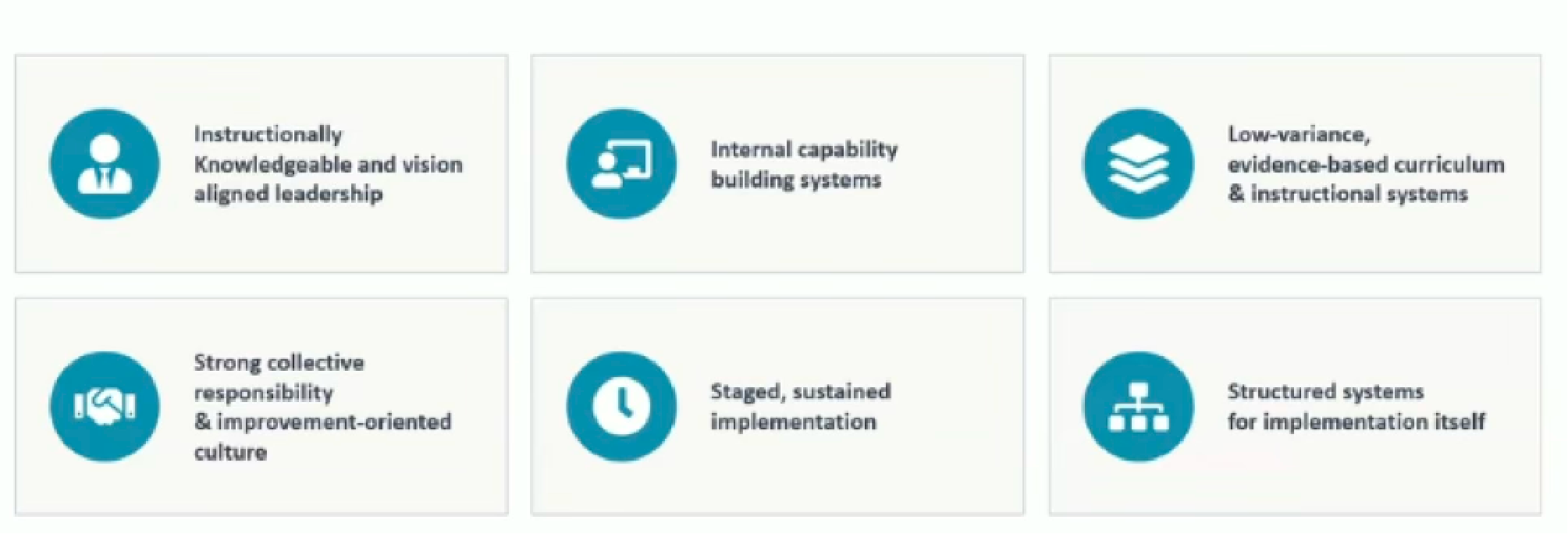
Across studies, schools that were effective had the following enablers.
Implementation science concerns itself with what the necessary conditions are for something to work in a setting, and helps shift the conversation from the “what” to the “how”.
‘…buy-in was not the main barrier to strong MTSS frameworks.’
Leaders cannot just lead from the back, but must be the lead learners in adopting MTSS who engage in the learning science and are invested in the professional learning and knowledge behind MTSS. This knowledge and practice then needs to be build capability through mechanisms such as coaching, learning walks, whole-school video models and encouraging support between staff. To ensure that teachers had the bandwidth to do this, a high-quality, low variance curriculum is needed to allow teachers’ efforts to be focussed on working in teams that engage in data collection, discussion, and pedagogical improvement. This level of collaboration should then foster a culture that looks towards improvement in the long-run. Culture is not something that happens overnight, and hence, allowing these processes to take their due course over time and allowing knowledge to be cemented and internalised is favourable to a reckless and speedy implementation. Once these conditions are in place, continuing to monitor and adapt the systems that they function in ensures that MTSS frameworks continue to become more effective. Implementation happens in stages, and is not a linear process, and schools must be willing to accept that some level of exploration and adaptation will be required.
Instead of simply thinking about how MTSS can be implemented successfully, Karina invites us to flip the narrative and think of the question, “What could destabilise this?” By adopting a proactive stance towards keeping MTSS frameworks stable and sustainable, MTSS is prioritised and protected from the vicissitudes of daily teaching. Often implementation difficulties arise from the system level, emphasising the need to think about the pillars holding up the framework and what might pose a threat to their stability.
Unfortunately, many schools have to attempt to set up their own internal systems, and lack the support of a true industry-wide framework from which to draw upon. Instead, decisions such as reactive funding cause MTSS to be its own downfall, where sufficient proactive measures that prevent students from being left behind paradoxically lead to a decrease in funding, causing a yo-yo effect that is governed by resource constraints. This begs the question of whether or not schools will be able to sustain effective MTSS without the support from a higher level of organisation. It is unsustainable to expect schools to have to start from scratch in building MTSS capabilities.
‘Leaders cannot just lead from the back, but must be the lead learners in adopting MTSS…’
The good news
Despite these challenges, a concerted effort to set up strong MTSS frameworks still generates significant positive change within school contexts. Students see stronger outcomes, while staff feel a greater sense of purpose and motivation. As MTSS frameworks are set up, leaders and teachers alike report both a better awareness of their school context, as well as an increased conviction in the worthwhile nature of MTSS.
What next?
Karina suggests that schools that are along their MTSS journey contain valuable information and expertise that should inform policy. With the experience garnered through implementation efforts on the ground, schools that achieve sustainable and effective MTSS frameworks can and should function as models or sources of MTSS leadership and direction. Despite its challenges and emerging nature, effective MTSS has been shown to be possible within schools. For school leaders, this means being brave enough to try, be it starting with a small pilot group or year level. For system leaders, this is a call to recognise that implementation of MTSS to lift all students should not be taken for granted, and perhaps this is the time to invest in the infrastructure to support schools in what we ask of them.